Work Permit Expiries in 2026 Could Affect Over 1 Million Indians in Canada
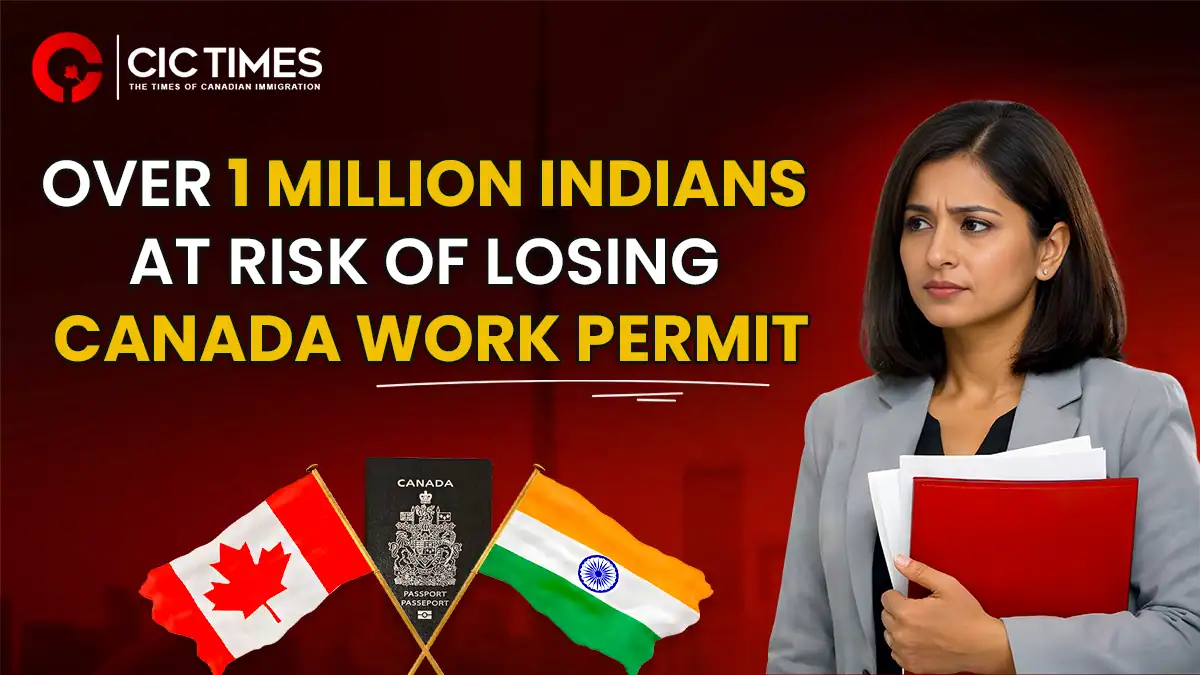
More than one million Indian nationals living in Canada may face uncertainty about their legal status in 2026. Many Canadian work permits and temporary visas are expected to expire amid tighter immigration controls under Canada’s evolving policy framework.
Canada is approaching a “status cliff,” which means many temporary residents could lose their right to work when their permits expire.
Because permanent residency pathways are limited, not everyone will be able to transition automatically. This makes early planning and selecting the right pathway to apply for Canada PR essential.
Indians form the largest group of international students, temporary foreign workers, and recent graduates in Canada, making them more exposed to the impact of these upcoming experiences.
Why are Canada Work Permits Expiring in 2026?
The high volume of expiring permits is largely due to the record issuance of temporary visas in previous years. In the first quarter of 2026 alone, an estimated 315,000 work permits are expected to expire across Canada.
While these figures appear concerning, they also reflect a shift in Canadian immigration policy toward prioritizing in-country talent, temporary work permit residents who are already contributing to the workforce and economy.
If your permit is nearing expiry, it does not automatically mean removal. Instead, it signals the need to transition toward a more permanent immigration pathway.
New IRCC Updates: Opportunities for Indian Graduates
Recent immigration updates offer positive signals for international graduates. Master’s and PhD students are exempt from the Provincial Attestation Letter (PAL) requirement. It helps reduce barriers to higher education pathways.
Additionally, IRCC has introduced priority processing measures for doctoral graduates and candidates in the in-demand sectors. This includes STEM and healthcare, helping eligible applicants transition between Canada work permits or permanent residence with minimal disruption.
How to Maintain Legal Status Before Your Permit Expires
One of the most important rules in 2026 is not to wait until the last 30 days. To maintain your right to work and remain in Canada, you should rely on maintained status.
- File extensions early: Submit renewal or transition applications at least 90 days before expiry.
- 90-day restoration window: If status is lost, applicants have 90 days to restore it, though work is not permitted during this period.
- Use mobility and provincial options: Some provinces have eased licensing or employment barriers for certain regulated professions. It allows workers to remain employed while PR applications are processed.

Transitioning TR to PR: Priority Streams in 2026
Canada Immigration Levels Plan for 2026–2028 continues to focus on retaining temporary residents. The “in-Canada transition” approach prioritizes workers already in the country for TR to PR conversion.
Category-based Express Entry draws remain one of the strongest options. It is particularly for candidates with experience in healthcare, STEM, education, and skilled trades. Where CRS cut-offs are often lower than general draws.
Provincial Nominee Program (PNP) allocations have also increased, offering additional localized pathways to permanent residence.
Expert Perspective: Turning Deadlines into Opportunity
While headlines emphasize risk, the 2026 permit expiry wave should be seen as a signal to move beyond temporary extensions and begin a structured PR strategy. By aligning your profile with the new occupation-specific categories, you can secure or easily apply for Canada PR.
If your permit is approaching expiry, a status review or immigration audit can help identify the best transition pathway and avoid gaps in legal status.
Subscribe for FREE and stay updated
with the latest Canada Immigration News!
Related Posts

Canada Extends Open Work Permits for TR to PR Pathway Applicants
By
Eva Olsen
[Published
21 Dec, 2024 | 03:49 PM]
87130

IRCC to accept PTE for Canada Visa applications in 2023!
By
Eva Olsen
[Published
04 Feb, 2023 | 07:57 AM]
63169

New measures will clear Canada Visitor Visa backlog by Feb
By
Eva Olsen
[Published
20 Jan, 2023 | 06:48 AM]
48126

What is the Canada PR process for Indian Lawyers in 2023?
By
Eva Olsen
[Published
13 Apr, 2022 | 03:34 PM]
39416

IRCC Releases June 2025 Canada Immigration Processing Time Update
By
CIC Times
[Published
10 Jun, 2025 | 06:40 AM]
38537
Stay up to date with the latest news









Comments
We welcome your feedback
Your email address will not be published. Required fields are marked *